

World Peace Inc.
Using the weight of the American presidency, Trump is building his legacy: a «Peace» institution financed by corrupt regimes, enforced by his personal army, and answerable to one man — for life.

He wanted the Nobel Peace Prize the way normal people want oxygen. Not quietly, not occasionally, but obsessively, publicly, relentlessly. The first time he mentioned it was somewhere in 2018. From there, it escalated. In his second run for office, he brought it up at rallies everywhere, in press conferences between questions about tariffs and trade wars, on Truth Social, in the margins of meetings about unrelated subjects.
He told reporters he had been nominated. Several times. By important people. Very important people. He explained, in some detail, that he deserved it more than most of the people who had received it. More than many, actually. Possibly more than anyone.
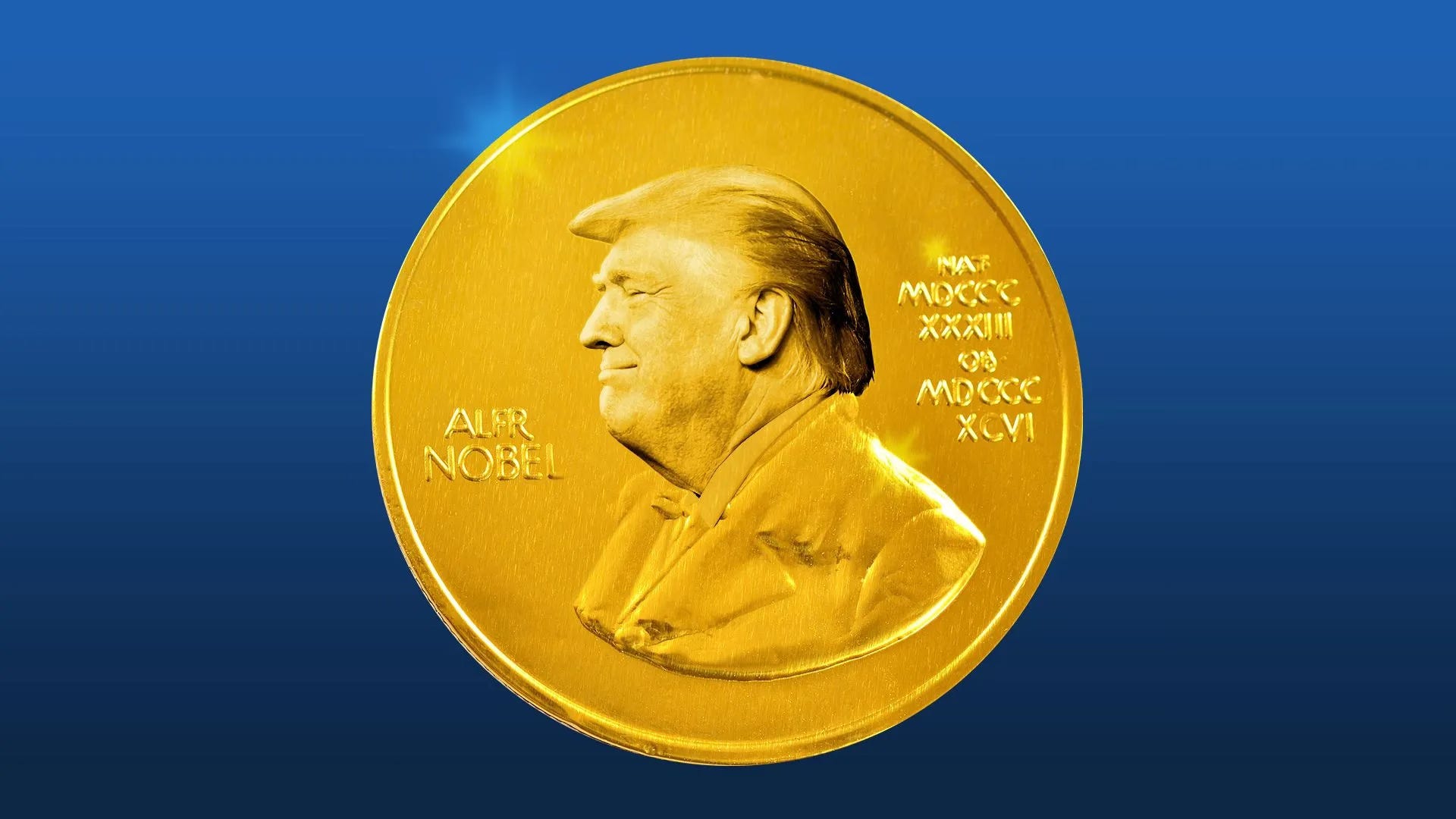
But despite how long and how much he had wanted it, despite how many wars he claimed to have stopped, despite the tariff threats and attempted manipulation of a sitting Norwegian prime minister — the prize, again, went to someone else.
In October 2025, the Nobel Committee announced María Corina Machado as its winner; the Venezuelan opposition leader who had spent years living underground, resisting Maduro’s dictatorship at enormous personal cost. Only three months later, the US invaded Venezuela, removing Maduro of his powers. Shortly after, Machado visited the white house.
With her — mounted in a gilded frame, inscribed as a gift from the Venezuelan people — Machado brought the Nobel Prize, the one thing Trump had been unable to get his hands on. To Machado, it represented twenty years of fighting for democracy in an increasingly authoritarian regime, it represented living in hiding, unable to see her children and family.
The Art of the One-sided Deal
She had done what people currying favors of capricious kings had always done: Bringing a rare and spectacular votive offering she even knew that he wanted. That it happened to be cast in pure gold, Trumps favorite color or material, depending on how you look at it. Hoping he would find the favor pleasant, that he would understand and consider the embedded message: That he now, as liberator, could help Venezuela become a true democracy. And perhaps, that she would be part of of rebuilding it.
And for the briefest of moments, it looked promising.
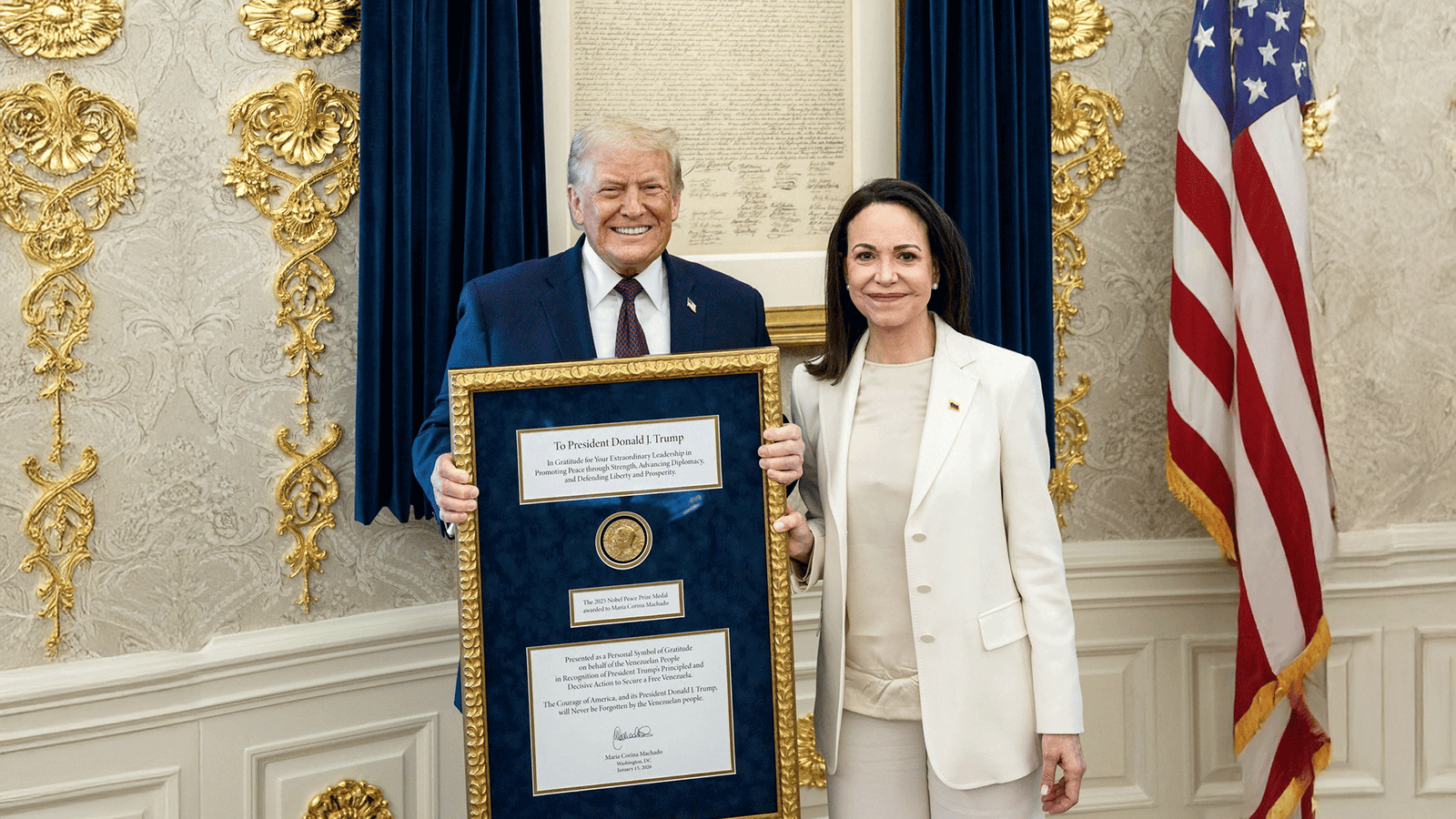
Trump posted a photograph of himself holding the frame in the oval office. He looked happy — a boyish, unguarded type of happiness that has become increasingly rare, as enormous and dark depictions of his stern face now loom over the facades of several federal buildings.
But the happiness didn’t last.
A few hours later, Machado left the white house. Gone was the medal. Trump said it was a “very nice gesture”. That she had told him nobody deserved the prize more than he did in history, and that he’d keep it. Machado didn’t quite leave empty handed. Leaving the White House, she was seen carrying a maroon paper goodie bag with Trumps name inscribed in golden letters.
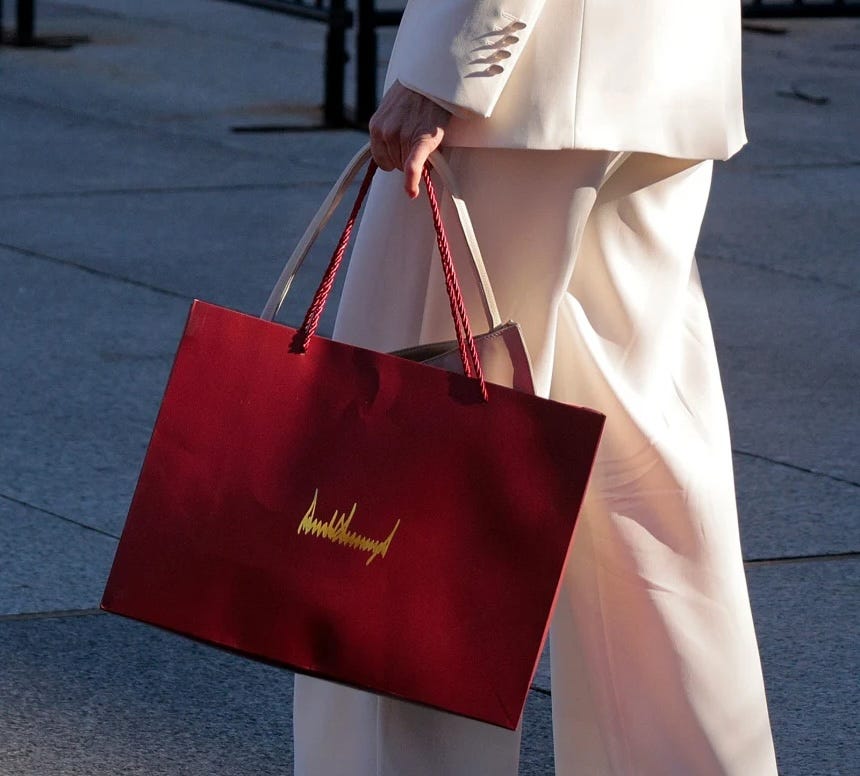
Some argued it contained merch from the white house MAGA shop. It was never confirmed. And it didn’t matter. Because the decision had since long been made. Trump told the press it was because she “doesn’t have the support within or the respect within the country”.
Why mind the facts. In the 2023 opposition primary, María Corina Machado won about 93% of the vote, and with the Nobel Peace Prize she and Venezuela held not just national, but global attention and respect. But Trump wasn’t in Venezuela to liberate the people, he was there to liberate the oil.
Two weeks earlier, Trump had already installed Delcy Rodríguez, the woman Maduro himself had called «the tigress»; his most loyal lieutenant, his ideological heir and — quite fittingly — his minster of oil.
The Pity Trophy of Peace
Machado should have done her research, read one of the many memos before quickly handing off away the one thing Trump at least thought he wanted; the one thing in this world that had truly been out of his reach. But she had misread something quintessential about the man.
Donald Trump doesn’t need anything. He wants.
«For me, the important thing is the getting, not the having.»
— Donald Trump in an interview with Associated Press (1990)
It might be the most honest thing he has ever said.
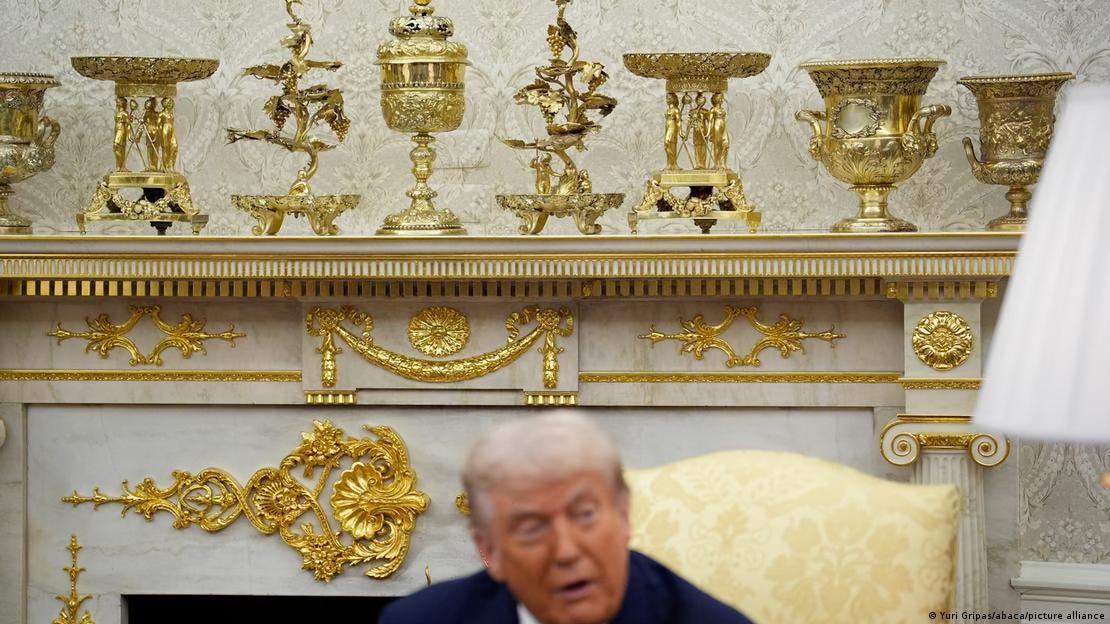
Even in the current Oval Office — where nearly every surface announces its own importance, where every wall is clad with dozens of gold painted plastic ornaments from Home Depot and everything that shimmered shimmered and glittered with the same brilliance — even Trump knows the difference.
For most laureates, the price it comes as a moral afterthought. It is a result of years or even decades of altruism, of focused work on behalf of causes larger-, or for people other than themselves. It is a recognition they were not expecting.
For Trump it would be the opposite. It would be the expected outcome of a negotiation, immediately turned into a media circus, with dozens of interviews, the journey, the security and spectacle, the ceremony, the stage, the speech. The entire world having to watch him, acknowledge him. To stop laughing — this time, forever.
The point would not be neither the peace nor the prize, but the ultimate proof that even the highest form of moral authority can be bent to his will, folded into a transaction and cashed in as eternal bragging rights.
But The Nobel Peace Prize is still one of the few things in this world that cannot be bought, coerced, courted, commanded or handed over as tribute.
It has to be given.
For a man who has built a career on the acquisition, on coming out on top, getting the better hand of the deal, receiving the medal from the actual winner is not a prize. It is an insult.
Three days later, Trump messaged the Norwegian Prime Minister:
«Given that your country has decided not to give me the Nobel Peace Prize for stopping eight-plus wars, I no longer feel the obligation to think only about peace.»
So, in true Trump logic, he built his own. A stage where he could outshine everyone. And, as always, make it spectacularly worse.
A Trumpian Brand of Peace™
Davos in January is a particular kind of theatre. The mountains are real. The snow is real. The sincerity is not. Men in seven-thousand-dollar suits talk about saving the world between canapés and private ski lessons. It is, statistically, the place on earth where the distance a private jet travels is inversely proportional to the importance of what gets done — and where seven hundred of them landing in the same airport is just another fact to drive the point home.
The perfect venue to announce the «Board of Peace».
Four days after the message to Oslo, Trump held his speech at Davos. Then, he signed the charter for his new Board of Peace. He called it a new international body — in his own words an alternative to the United Nations. Enduring peace across all conflict zones was, apparently, the ambition.
A billion dollar entry-ticket
To secure permanent membership, countries are invited to contribute at least one billion dollars within the first year. One billion dollars. Without payment, membership would last three years — renewable at the discretion of the chairman. The chairman being Trump. For life. Not for his presidency. For life. It’s his own «Peace Incorporated»
«We have the greatest leaders in the world joining the Board of Peace. I think it has the chance to be the most consequential board ever assembled of any kind.» — Trump 19.02.26
Trump can invite nations in or expel them at will. He controls the executive committee — among them Jared Kushner, his son-in-law, and Tony Blair, lending the project the very thinnest veneer of establishment seriousness. Trump is, the charter states plainly, the «final authority» on all matters. He decides who gets hired and fired — an eternal reality show where he makes the calls.
And the first call he made, was the rebuilding of Gaza.
The Riviera of Peace and Prosperity
To the untrained eye, Gaza’s reconstruction might read as a noble goal — unusual, certainly, for a president who spent years campaigning on «America First» and whose first months in office were spent systematically dismantling every institution the United States had built for foreign aid, humanitarian assistance, and international support. USAID gutted. The State Department hollowed out. Billions in development funding cancelled. Trump had made it unmistakably clear: America was done paying for other people’s problems.

So it is worth pausing on what happened next. At the inaugural meeting of the Board of Peace on February 19, Trump signed an executive order elevating his own venture to the same formal status as the United Nations. Then he turned to the press and announced that the United States would pledge $10 billion to the Board of Peace.
$10 billion tax payer money, pledged by president Trump to a private institution that private citizen Trump signed into action only seconds ago. No congressional authorisation, no budget line, and no explanation of where the money would come from. To an institution that the private citizen Trump controls, for life.
Any previous distinction between President Trump and businessman Trump—if one ever truly existed—had now been completely obliterated.
Senate Democrats called it «totally illegal.» But the more revealing question is not legal. It is this: of all the rubble in the world, of all the suffering his administration had walked away from — why was Gaza suddenly worth $10 billion of American taxpayer money?
As with everything else he does, Trump has since long been completely transparent about the deep corruption he was planning. A year earlier, on the 9th of February 2025, as the deaths toll of the Gaza war were over 60.000, Trump told journalists:
«Think of it as a big real estate site, and the United States is going to own it and we’ll slowly — very slowly, we’re in no rush — develop it.»
— Donald Trump (February 2025)
When Jared Kushner entered the Davos stage — moments after Donald Trump had signed the Board of Peace charter — he did not speak like a «Special Peace Envoy» — another unofficial title awarded to him by Trump on that same day — he spoke like a real estate developer. «
«We have a masterplan,» he declared. «There is no Plan B.»
The Masterplan
Gaza, he proposed, would be rebuilt in six phases from south to north: a coastal tourism zone of 180 skyscrapers, a new city called «New Rafah» with over 100,000 permanent housing units, 200 schools and 75 medical facilities.
The leaked plans, developed by consultants from BCG that was later fired for their participation, projected lifting Gaza’s GDP to $10 billion by 2035 — up from $362 million in 2024. All financed through an «innovative funding model» — public land placed into a trust, assets sold to investors through digital tokens.
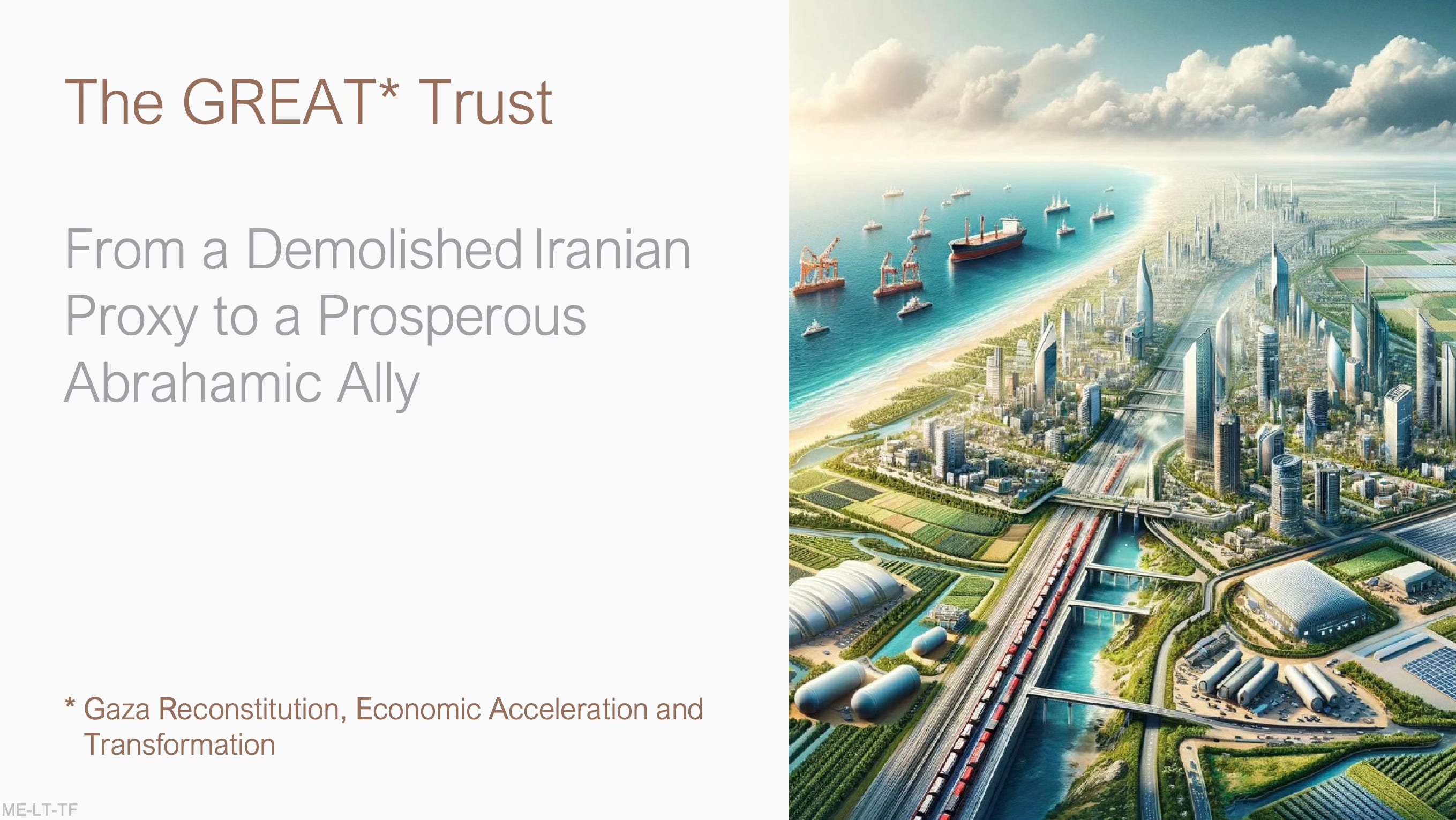
In venture capital, a projected growth rate of 35% is considered exceptional; an extremely aggressive, high risk, high return investment. It is a growth rate that only hugely successful companies like Apple, Amazon have only held in their peak growth. Like Apple, under the iPod and iPhone years. Not just that, it is a 27x increase of the pre war GDP in Gaza.
Projected revenue: $185 billion over ten years.
Number of mentions of the two million Palestinians currently living there: zero.
While these are opportunistic, extrapolated numbers made up to attract investors with a high risk appetite, they tell a story, and — just like Venezuela — it is not a story about peace or democracy. It is a story about power and personal profit.
We now can see what the «innovative funding model» might be referring to: use the label of humanitarian aid to redirect state-sponsored relief toward zones of private interest, and make governments pay for access to the US president.
The innovative funding model
Under a network of actors with glorified names like the Gaza Humanitarian Foundation, the GREAT Trust and others, has been assembled from the same tight circle: Israeli venture capitalists, American private equity heirs, former CIA officers, military contractors, and now — the members of the «Board of Peace».
Trump calls it «peace». He calls it «rebuilding». He even calls it «humanitarian aid», «freedom zone», a «Riviera», an «ownership position», a «phenomenal location by the sea». The words change depending on the audience. The plan does not.
Boston Consulting Group the company that developed the GREAT plan, eventually withdrew and fired fired the consultants involved, concluding the project could not proceed without violating international law.
They pressed forward regardless.
The Members
The question of who accepted to participate in Trumps BOP tells you everything. As of this moment, the list is as follows:
Accepted: Saudi Arabia, Qatar, UAE, Kazakhstan, Uzbekistan, Azerbaijan, Turkey, Hungary, El Salvador, Pakistan, Argentina, Indonesia.
Refused: Norway, Sweden, Germany, Ireland, France, New Zealand, the United Kingdom.
Invitations are still pending, but the composition is unlikely to change much
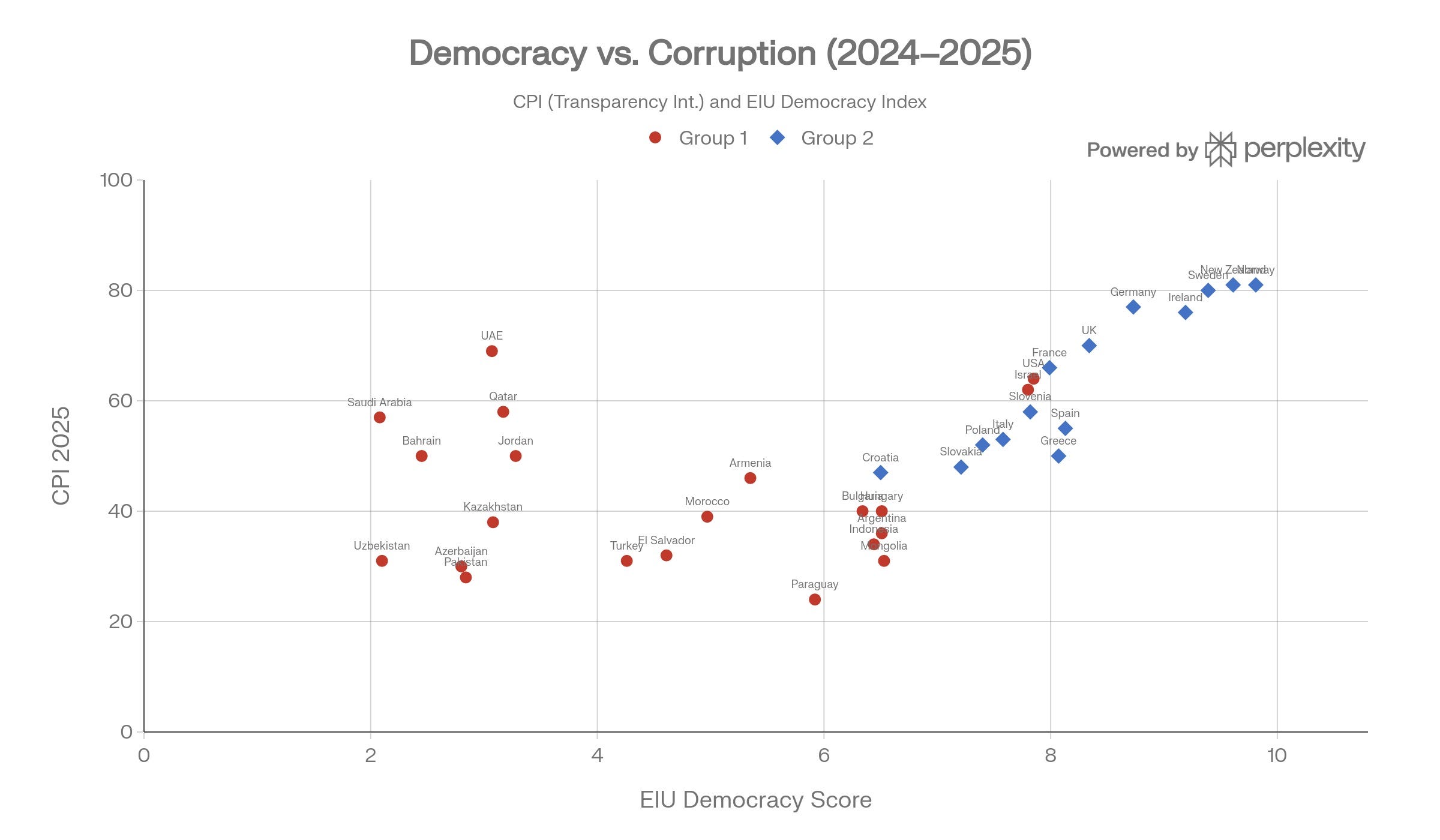
The states buying into Trump’s Board of Peace are clustered among the world’s most compromised and least democratic regimes. The refusers are almost all high-integrity liberal democracies.
The data is unambiguous. Countries that said yes average a Corruption Perceptions Index score in the low 40%. This below the threshold Transparency International associates with systemic corruption. Those that said no average close to 64%. If we combine the data with the Economist Intelligence Unit’s Democracy Index, the pattern hardens: the joiners cluster in hybrid and authoritarian territory; the refusers sit among full or high-functioning democracies.
Before the bombs
Before the bombs, Gaza was a place.
Not a conflict. Not a crisis. Not a chyron on a cable news screen. It was home to two million people whose families had lived there through a century of occupation, displacement, and siege, and who had — despite, the blockade, the constant pressure from the Israeli military, settlers, a collapsed economy, sky‑high unemployment, and an infrastructure so degraded that electricity, medicine, and clean water were never something you could take for granted — despite everything, had managed to hold on.
Universities, libraries, markets full of noise and colour, restaurants where families ate on Friday nights, a film culture, a literary tradition. A civilisation — layered, contested, resilient, and stubbornly alive.
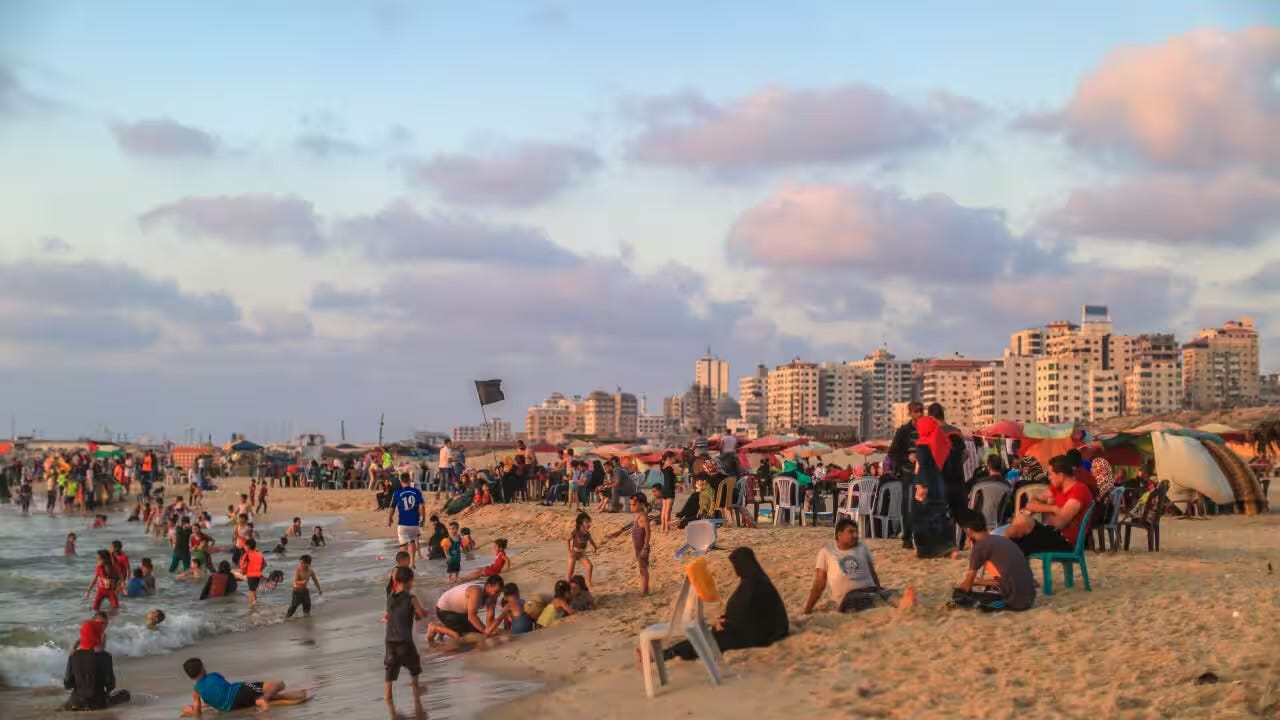
What followed the initial artillery, air strikes and ground invasion after October 7, 2023 was not simply the destruction as part chaos of war.
It was systematic. Methodical. Deliberate.
The IDF moved through Gaza’s neighbourhoods in sequence — after the air strikes came the ground forces, then the engineers. Apartment blocks, mosques, schools, hospitals, cemeteries, heritage sites dating back centuries that weren’t already destroyed were emptied and then detonated deliberately, block by block, using controlled explosives
Families were first driven south, then west, then south. The stated justification was as consistent as it was vague: Hamas was said to have operated from these structures. The structures had hidden terror infrastructure. They had to be taken down entirely. At the scale of destruction, the claim became impossible to verify, and — for many — impossible to believe.
As of early 2026, 84% of all structures in Gaza have been damaged or destroyed. Over 330,000 housing units are damaged; more than 102,000 buildings, completely demolished. And over 71,000 Palestinians have been killed. ⅓ of them, children.
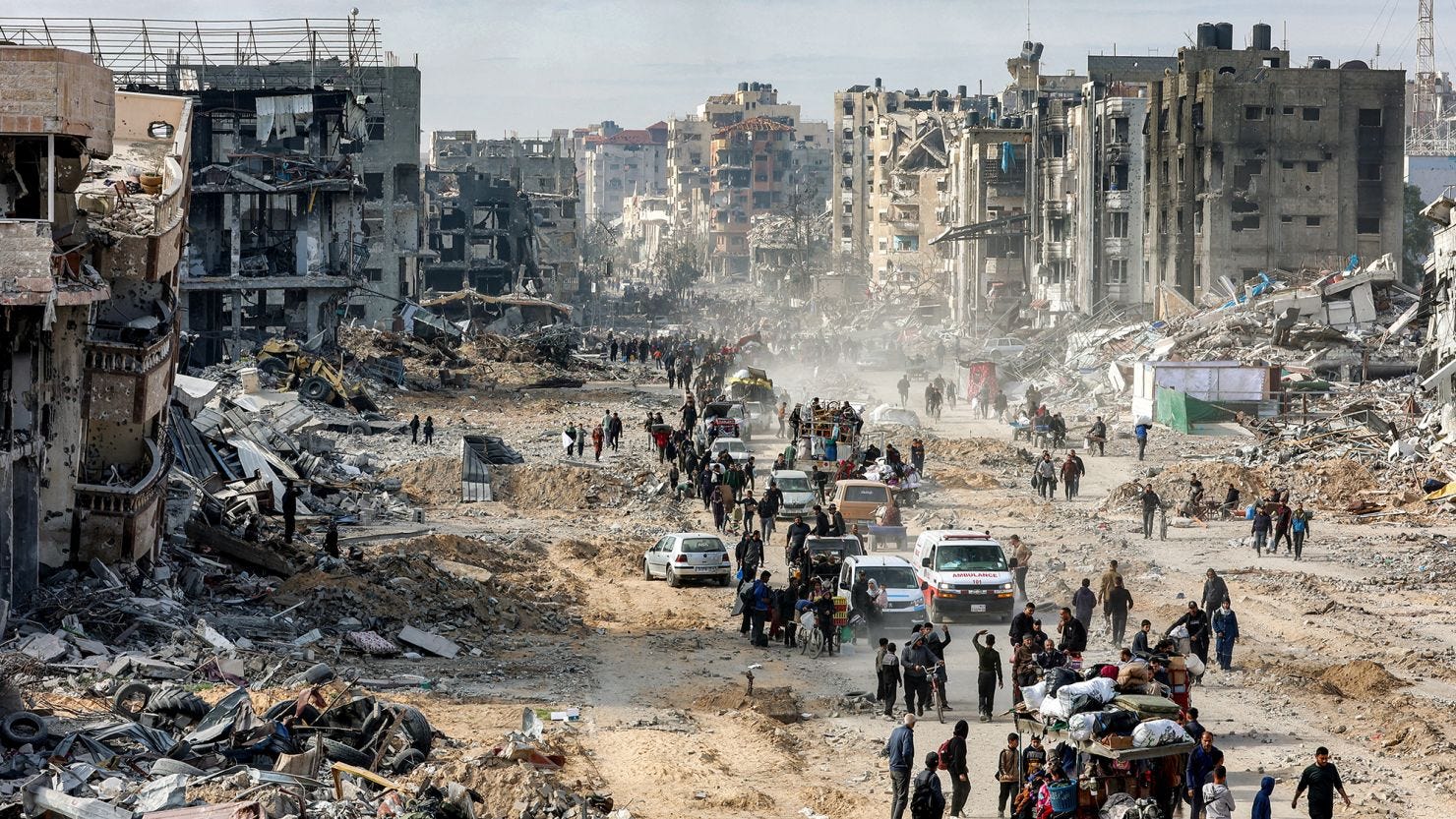
For any normal human being, this is a catastrophe of unimaginable proportions. That the rebuilding of Gaza cannot be done on anyone else’s terms but the Palestinians’. As of September 2025, 157 nations — more than 80% of all UN member states — formally recognise the State of Palestine. UN Secretary, General Guterres, standing alongside Macron and the Saudi foreign minister, was unambiguous: Palestinian statehood «is a right, not a reward».
«The only realistic, just, and sustainable solution is two States — Israel and Palestine — living side by side in peace and security, within secure and recognized borders […] Ensuring full accountability for any atrocity crimes and other violations of international law. Restoring credible political dialogue. And reaffirming the equal rights and dignity of both peoples.»
— UN Secretary-General António Guterres, 28. July 2025
But when Trump looks at Gaza, none of this registers. What the sitting president of the United States, and now also the Chairman of the Board of Peace—perceives is this
«The Riviera of the Middle East — it could be so magnificent.»
— Trump (February 2025)
And his message has been consistent.
«I am a real estate person at heart, and I said, look at this location on the sea. Look at this beautiful piece of property.»
— Trump on the Inaguration of The «Board of Peace» (Davos, January 2026)
The deal of the Century
Gaza’s coastline runs 40 kilometres along the Mediterranean. It is the same sea that laps at the shores of Cannes, Marbella, and Tel Aviv. South Beach — three kilometres of sand in Miami, the strip Trump knows better than any other place on earth — sells beachfront at $50,000 per square metre.
Gaza’s entire coastline, in a post-war reconstruction scenario priced conservatively at half of Tel Aviv rates, represents a real estate opportunity in the tens of billions of dollars. The GREAT Trust document puts Gaza’s current value at «practically $0». Kushner and his colleagues pitched it to private investors as a $50 billion play.
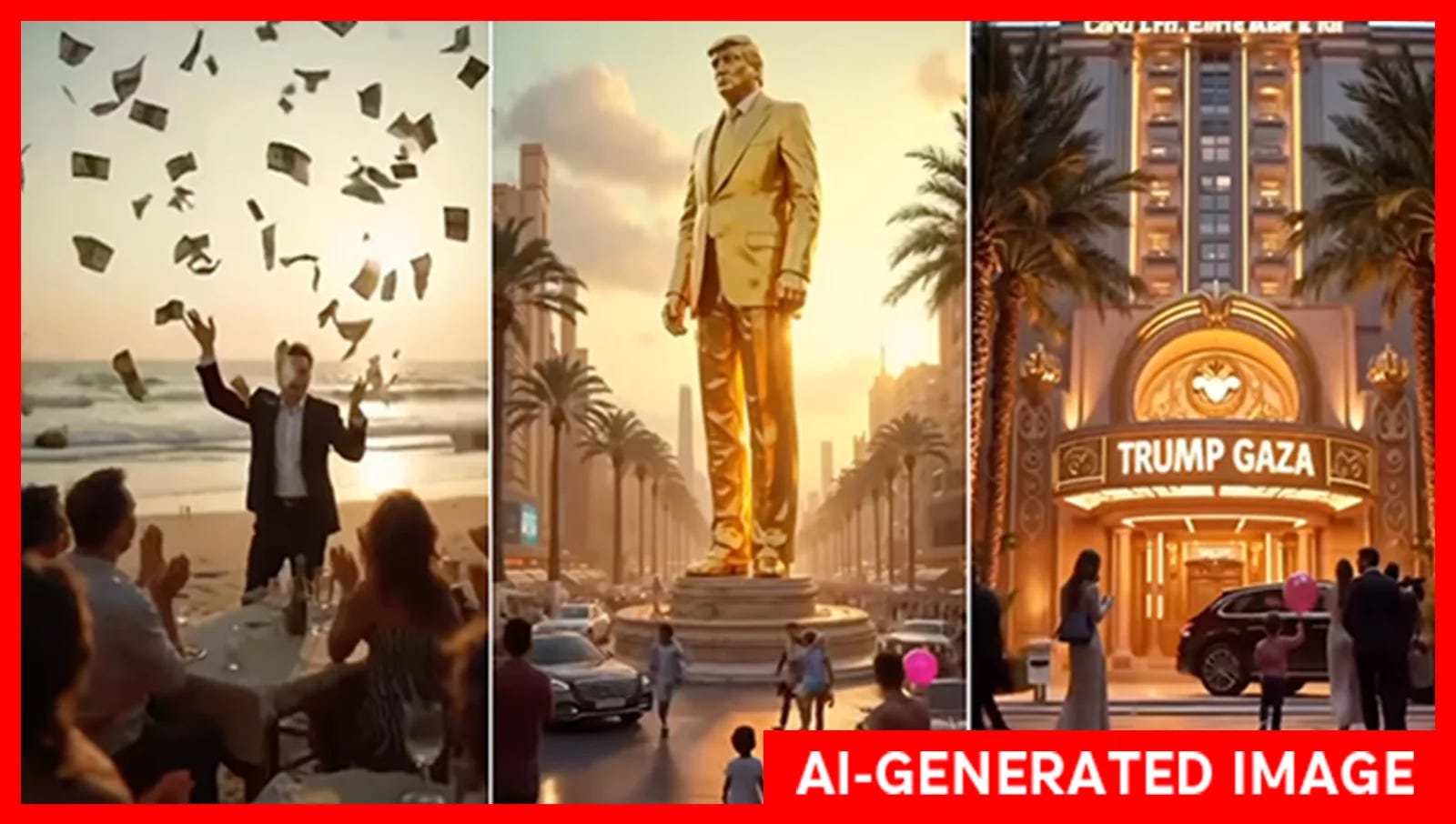
This is why Trump called it «phenomenal». This is why there is «no Plan B». This is why the 180 skyscrapers are planned specifically for the waterfront. For a man who has spent his life buying distressed assets, the real estate deal of the century outshines the humanitarian crisis by a landslide.
The only remaining question, looking through those eyes, is logistical. How do you get two million Palestinians to accept a vision of luxury skyscrapers, casino resorts, and a golden statue of Donald Trump on their beach?
The answer is: you don’t.
You just need an army. Not an unpolitical UN peacekeeping force.
The Trump army.
Trumps Peace Proxy Army
In the language of international law, a peacekeeping force is defined not by what it does, but by what it does not do; It does not take sides. It does not serve the interests of the states that fund it. It is a nobody’s army.
Which is — as you would expect — the exact opposite of Trumps plans.
Trumps «International Stabilisation Force» — 20,000 troops and 12,000 police, recruited from Albania, Indonesia, Kazakhstan, Kosovo, and Morocco — answers directly to the Board of Peace, which means Trump. Not the UN or the President of the United States, where it would be subject to congressional oversight and answerable to voters.
«The mission of the ISF would be to control, contain, disarm, and further disempower the Palestinians victimised by the genocide — without touching the regime perpetrating it.»
— Craig Mokhiber, former Director, UN Office of the High Commissioner for Human Rights
Consider what this would mean in practice. ICE — an agency that has reshaped daily life for millions of Americans through fear and force alone — deploys roughly 20,000 agents across 9.8 million square kilometres. Trump’s proposed Gaza force would deploy 32,000 personnel across 365 square kilometres: 44,000 times the density.
Not to protect Palestinians. To protect the investment.
What Trump is proposing is a private military dictatorship in another country — built on the ruins of a genocide, funded by autocrats, enforced by their soldiers, and designed to eternally enrich the man at the top the moment he stops being president.
It is illegal now, while he holds office. After January 2029, it will just be business.
The Forever Dictator of Peace
What Trump is constructing, using the immense powers at the disposal of the American state, is building a private institution he will personally control for the rest of his lifeAn institution backed by the sovereign wealth of autocratic states, equipped with its own military, running Gaza as a expat dictator, controlling. There is reason to believe he also sees the chairmanship as personal immunity — a structural argument that a private peacemaker cannot be prosecuted. A shield built from the language of peace. A gilded peace throne disguised as a podium.
The reason it slips by unrecognised is not that it is too clever. It is that it is too large. It is so extravagantly visible, so incredibly wrong, so stupid, while at the same time being so unhinged, that the stupidity itself becomes the strategy and alibi.
Hunter S. Thompson, writing from Las Vegas in 1971, understood something about the relationship between scale and visibility:
Don’t waste any time with cheap shucks and misdemeanors. Go straight for the jugular. Get right into felonies. The mentality of Las Vegas is so grossly atavistic that a really massive crime often slips by unrecognized.
Trump has learned the same lesson, and built a political business model on it.
The Biggest Heist in Human History
It is a testament to what global governance looks like when it migrates from multilateral institutions built on inclusion and accountability, toward exclusive clubs anchored around powerful individuals with direct access to the state treasury. Legitimacy earned through representation, replaced by favors purchased in hard currency.
Trump has branded water, steaks, a Bible, and a reconstruction plan for someone else’s bombed-out coastline. Perhaps it was inevitable that he would brand peace itself. For the doors it opens, the legitimacy it creates, in the purest and shimmering act of dissonance ever heard or seen.
But the boldest and most audacious move of all? It is the totally transparent, forecasted heist of $10Bn from the US treasury.
I want to let you know that the United States is going to make a contribution of $10 billion to the Board of Peace... and that number is a very small number when you look at that compared to the cost of war.
If he succeeds, by ousting Powell, installing a treasury loyalist that will give him direct control over the nations purse, this might very well become the greatest heist in the history of the world—far surpassing Saddam Husseins $985 Million, or the largest crypto and cyber heists in history by a factor of 10. Still with ample time to pardon anyone that might be prosecuted for participating. If he so chooses.
Trump just continues doing what he does best: Raising the stakes, while pursuing the next, bigger scam.
And — perhaps, maybe, probably — getting away with it. Again.
We’ll see. We’ll see.