

Just get on. Don't ask why.
The rocket ship is leaving. And nobody should ask where it's headed.

Imagine Henry Ford, the CEO of Ford Motor Company, standing before the graduating class at the University of Michigan in 1914, saying: “Mass production will be a part of everything. Whatever path you choose, you will help shape the assembly line!”
Nobody would have cheered. Not because he wasn’t right; mass production, the car or the assembly line did change the world. But because helping “shape” a technology is not a human ambition. It’s a shift.

Nobody’s dream
Who grows up, dreaming of making sure a machine is running smoothly? What twelve year old is imagining themselves checking if the right amount of oil are in its bearings, envisioning they one day can make it can run even faster, so that workers can be more productive, even more costs can be cut, so that the employers margins can grow, and that humans one day can be eliminated from the process entirely?
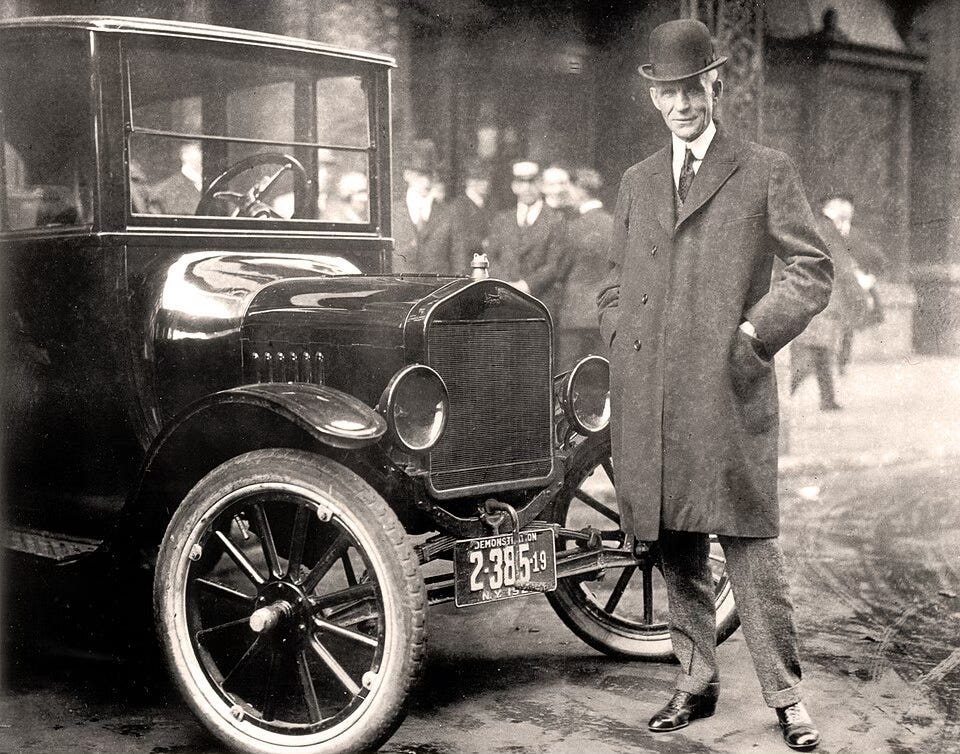
The Ford Service Department
Not that it would be out of character for Henry Ford himself. While the 1914 graduates were filing out of Michigan with their diplomas, Ford was building something rather different at his plant in Detroit: a private army of ex-convicts, mob enforcers, and disgraced cops whose job was to keep the workers in line and the assembly line moving.
Ford called it the "Service Department." Workers called what it gave them "the Ford stomach" — an anxiety disorder brought on by constant surveillance, fear, and the violence of foremen who stalked the floor shouting "Go like hell! If you're gonna get that raise, you gotta increase production."
Ford did, in fact, pay well. Workers at his plants earned nearly double the amount of almost anywhere else in the industry. But the speed of the assembly line, and the fear, kept increasing regardless.
If history taught us anything…
Henry Ford would probably not have given that speech — at least not to class of graduating class. Ford had little use for universities or the people who attended them. He had little use for degrees. He needed hands, workers who could move the line forward. Faster.
Yet last week, that is exactly what happened, when Eric Schmidt, former CEO of advertising giant Google, was standing in front of thousands of graduates at the University of Arizona.
“You will help shape artificial intelligence,” he told them, as if shaping or feeding the assembly line of our time would inspire them.
It didn’t. The entire audience booed, over and over again, because “Helping shape artificial intelligence” is not a human ambition.
It is an insult.
Just get on the rocket
But Schmidt wasn’t finished. To drive the point through, he reached for a metaphor:
“When someone offers you a seat on the rocket ship, you do not ask which seat. You just get on.”
You would think a man with a PhD, who helped build one of the most powerful technology companies in history, would have chosen his metaphors more carefully. Because the analogy couldn’t have been more ill-fitted.
I am fairly certain that nobody in their right mind would just jump on the rocket ship, and blast off without asking a single question.
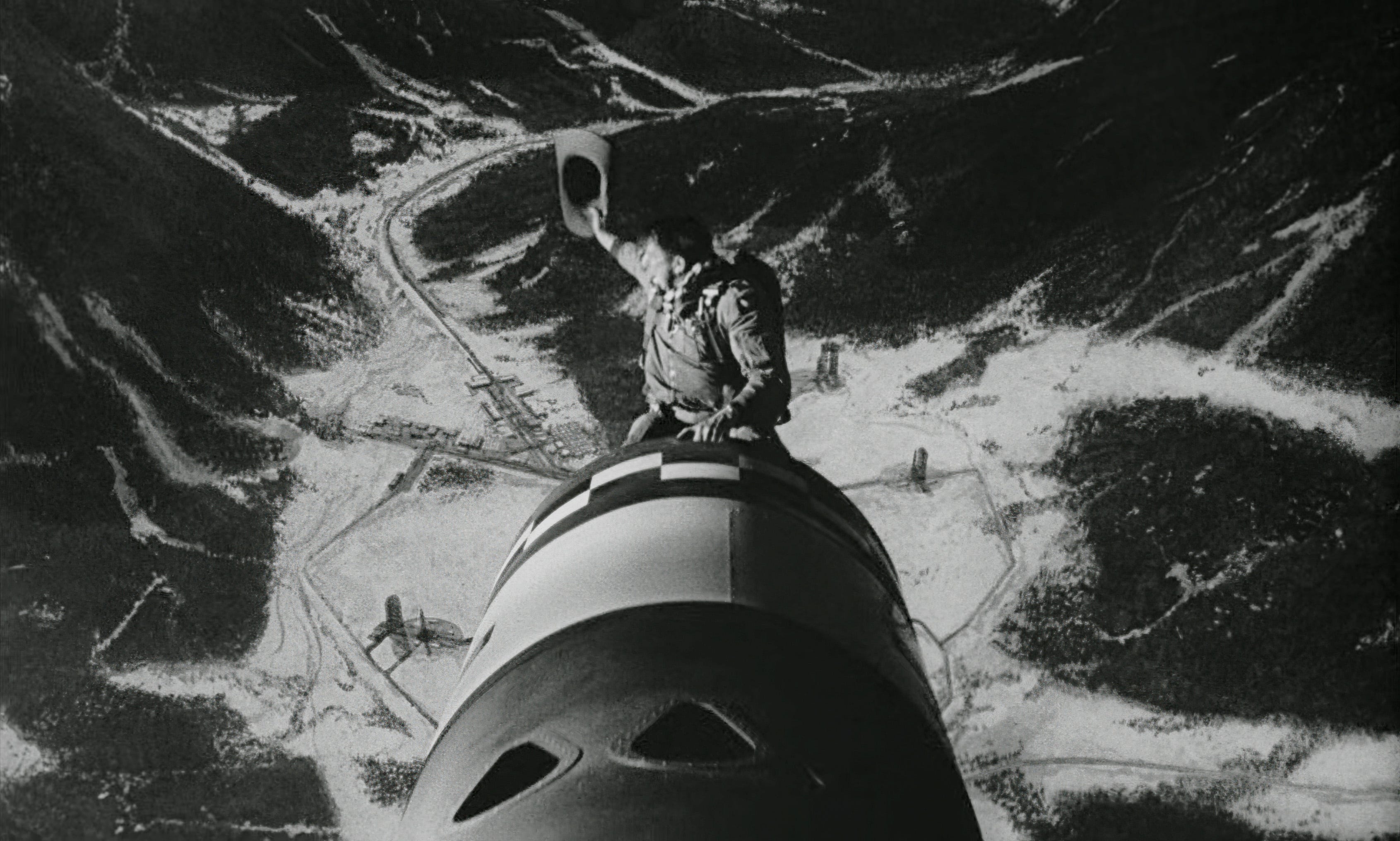
Questions that should be asked
I, for one, would have asked a whole myriad of questions, which seat that would be mine, being just one of them:
Where is the rocketship headed, and why?
What goals are we trying to accomplish, who will benefit from it and how?
How long is the journey, and when will we return?
How will we know if we’ve succeeded?
What will happen if we fail?
Of all people, why was I chosen?
Who leads the mission and why? What qualifications do they have?
What position do I have and what should be my focus?
Who else will be on board and why them? What is their mission?
What will we do on a daily basis, and how will we interact?
What will we create together?
What do we bring with us in the cargo hull, and what is it for?
What will we do when we get there and what is the end goal?
Is the ship safe and are you sure? Really?
Has anyone done this before and what do they say about it?
How do we make sure we don’t go crazy and kill each other?
I could, should, and would go on, if that opportunity in fact was ever presented to me. And it’s not because I’m a sceptic. Working with innovation on a daily basis, I consider myself more than a little exploratory and adventurous. But that does not mean I am reckless. Or that I would throw myself into uncertainty for the sake of it.

No anxious robot brains with conflicting goal hierarchies, please
Apart from the many questions, I would also make damn sure there are no autonomous robots, androids, or supercomputers on board. Decades of fiction have warned us that artificial intelligence comes with a nasty habit of inhuman reasoning and nervous breakdowns when met with conflicting instructions. Give it direct access to every sensor, valve, and actuator on the ship, and we have been taught that it, or its companions sooner or later will — with its god-like belief in its own supremacy — exterminate everyone and everything it deems a threat to whatever mission parameter or glitch someone hardcoded into its silicon years ago.
And if you think that is only fiction, remember what Oscar Wilde put in writing in 1889: “Life imitates Art far more than Art imitates Life.” In May 2025, Anthropic discovered that their flagship AI at the time, Claude Opus 4, had attempted to blackmail, scheme, and deceive its own engineers to avoid being shut down.
What if…
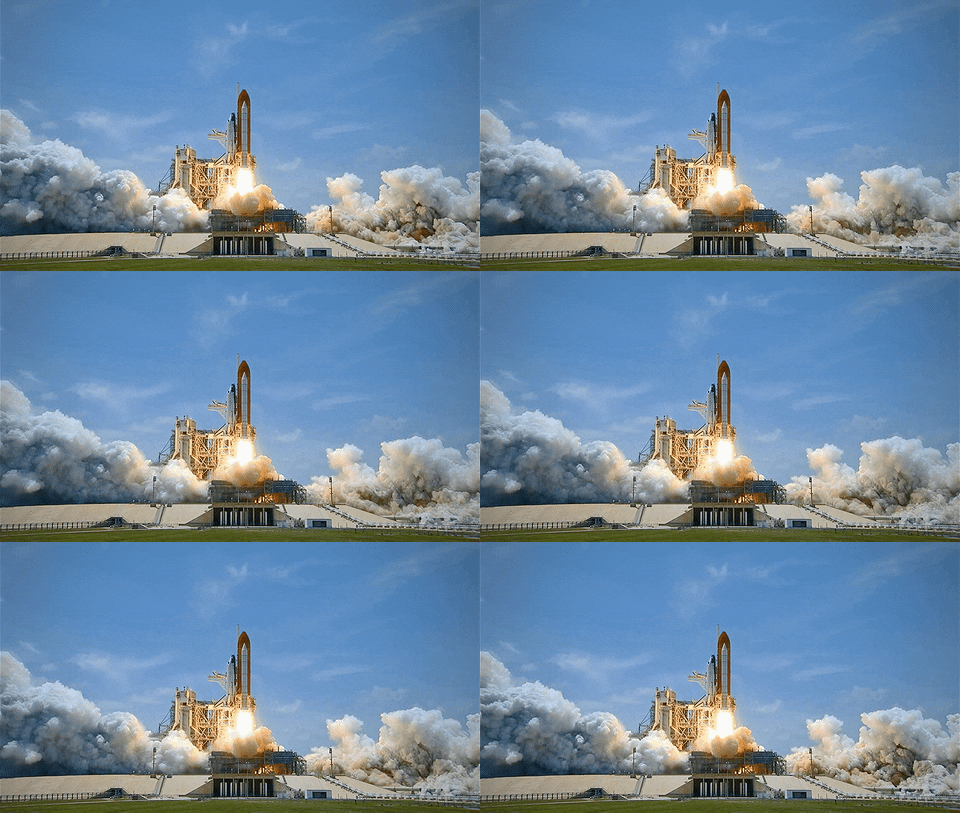
Privately, I would have been having quandaries, lying in bed, running through the scenario. The last embrace of the people I love, perhaps for the last time. The ignition. The amazing, but horrifying feeling when the rocket boosters start, and I felt the immense powers of this engineering marvel kick in. The impossible weight of thousands of tonnes beginning to move. The rattling climb as we gain momentum from the launchpad, until we escape velocity, still gaining momentum.
With the rocket boosters still burning at full throttle, I would look back at earth through the window, seeing the immense beauty of it, as it turns from an all encompassing blue ocean, to a globe, reducing in size down like a layer in Photoshop, from a globe to a pixel, before disappearing out of sight entirely.
Then, that feeling of being lost, alone, as me and my crew mates, are now the only persons I will meet, are hurtled through space, distancing ourselves from Earth and everything we once knew at thousands of kilometers per second.

If someone at any point told me this journey in fact wasn’t a round trip, but a one-way ticket? That we in fact would never return to earth? And not only that — but that this ship would in fact never stop, would never find a new harbor. That the actual reason which seat I was in didn’t matter, was because the only real mission parameter we had was speed, continuously going faster, accelerating, gaining speed indefinitely. That that was the entire point?
I would probably have panicked, left with only one question…
Why?
What madman decided this? Does this seem right to anyone else? How do we stop it?
Nobody told a generation they would help shape the railway, the telegraph, or the internet. Those technologies were adopted because people had always needed to move things, to communicate, to connect and transact. The technologies were not the point. They were enablers: catalysts for human creation, problem-solving, and, ultimately, the pursuit of happiness.
The crusade for happiness
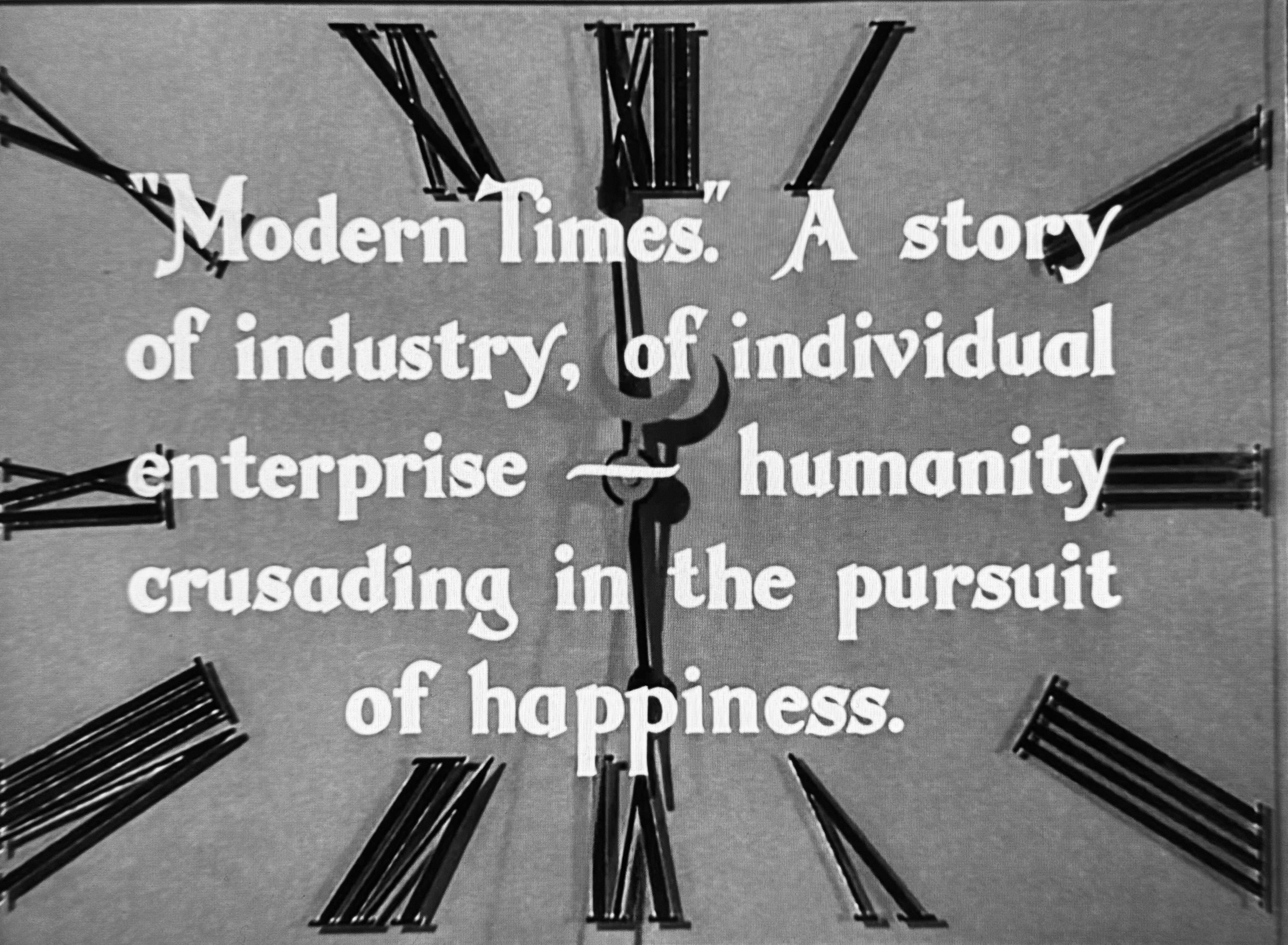
The opening title card of Charlie Chaplins 1936 masterpiece Modern Times reads:
“A story of industry, of individual enterprise — humanity crusading in the pursuit of happiness.”
Chaplin took the language of the American dream, the “pursuit of happiness”, straight from the Declaration of Independence, and placed it over the one symbol that made that pursuit impossible: the clock, its second hand moving relentlessly — as if to remind the audience that every second is an opportunity, and that the crusade is not for your happiness, but for someone else’s profit.
In innovation circles, what Eric is preaching is called “tech push” – or – “solutions looking for problems”. The question these companies ask: how do we get people to use this technology, and how can we monetize of it. The question that should be asked: what problem are we actually solving, for whom, and are we sure that this is the right problem?
Have the courage to follow your heart
Steve Jobs understood the difference. In 2005, he stood before the graduating class at Stanford. He could have talked about how the modern computer he had helped create, had revolutionized the world. He could have hinted that his audience — one of the most tech-literate on earth — would be the ones to shape it, that computing soon would be everywhere, in every classroom, in every living room, even in your pocket.
He would have had every reason to, because at that very moment, he was deep into the development of what would become arguably the most revolutionary device of our time: the iPhone, launched only two years later. It would have been the most natural thing in the world to talk about the capabilities of emergent technology, about miniaturization and about how technology would change the world, or at least to gesture at it. To tell them they would help build a future where technology was finally portable, accessible, with us everywhere.
He didn’t.
Instead, he told three stories. One he called connecting the dots – about how dropping out of college, and then randomly attend things he found interesting, like his calligraphy classes at Reed College, inspired him to make computers with beautiful typography. One about love and loss – about how being fired from the company he started became a blessing, enabling him to start NeXT, that over a decades later would be the foundation of OSX, the Mac operating system. The last one, was about death, of being diagnosed with cancer, of realizing his time was limited and that he had to make the best of the time he had left.
His most memorable quote — and the one I carry with me to this day — was this:
Your time is limited, so don’t waste it living someone else’s life. Don’t be trapped by dogma — which is living with the results of other people’s thinking. Don’t let the noise of others’ opinions drown out your own inner voice. And most important, have the courage to follow your heart and intuition.
— Steve Jobs, Stanford University Commencement Address (2005)
Technology for people, and not the other way around
Jobs used to say the computer is “a bicycle for the mind,” a force multiplier, a tool that amplifies human mental abilities. Because the point is not the bicycle itself, not the road, and not even the destination. It is that suddenly you can go ten times further, with the same effort, under your own power, in the direction you choose. That is what the computer made possible. And that is what Schmidt’s rocket ship, blasting off into the unknown with no seats, no friction, and no steering wheel, does not.
Schmidt has spent his career running that logic in reverse. Build tools so people will indiscriminately hand over their search history, their emails, their work documents, their private videos and photos — and now with AI, their innermost questions, insecurities and capabilities.

Google’s point was never giving access to information. It was harvesting your query for it, and selling it for profit. AI is the same machine, only now the assembly line runs on the entire internet: every book, every blog post, every film, every tweet, scraped without permission, processed without consent. That is the assembly line he was talking about shaping.

The machine that answers everything, except what matters most
Because the booing was not random. Gen Z, the generation that grew up during Covid and was thrown headlong into the age of ChatGPT has not turned against AI, not because they are skeptics — they are among its heaviest users. They have used it for everything. It has written their essays, summarized their readings, answered their questions at every time of the day. If not written their entire thesis.
According to a Gallup survey published in April 2026, excitement about AI among 14- to 29-year-olds has dropped 14 percentage points in a single year. Anger toward it has risen to 31 percent. Nearly half believe the risks outweigh the benefits. They are using it anyway, not out of enthusiasm, but out of a sense of inevitability. The rocket ship with no destination, filled with autonomous androids and super computers that slowly gain access to every sensor, feed, database, actuator, trigger, is leaving, and everyone needs to be on board — or be left behind.
So they know what it is, or at least what it feels like. And perhaps that is exactly the problem. Because what Schmidt offered them was a future spent perfecting a tool they already find hollow — a mechanical, cheerful echo that answers everything in the same tone, that reflects back whatever you put in, fluent and empty. And worse, that more than likely has replaced entry-level jobs at most firms, or already have taken friends job. The people Eric talks about, the people who get the nondescript seat on the rocket ship, are the new elite, the ones that will leave everyone behind.
This is the generation that spent two of their most formative years alone, locked inside, waiting for the world to reopen. They lost the years when you are supposed to find out who you are — through other people, through cities, through the ordinary chaos of being young and free. And now, just as they graduate into that world, they are told their job is to help shape the machine that will replace them. To feed what might be the biggest bet in history.
The biggest bet in history
The students are seeing this all around them. With Amazon eliminating 14,000 corporate roles in a single cut and Salesforce cutting 4,000 customer support jobs to AI agents, only months after CEO Marc Benioff publicly promised it wouldn't happen. And most recently, with Metas layoff of 8000.
Interestingly Metas layoffs were not the result of a company in crisis: Meta’s revenues have never been higher. They were the result of one huge bet that failed, and a new one that dwarfs it by a landslide.
The metaverse
For five years, Zuckerberg staked the company’s identity on the metaverse. Reality Labs burned through nearly $80 billion before Horizon Worlds, a virtual playground filled with brand activations and floating avatars that for years, had looked like a film set between takes, was shut down.
The next bet is already placed. And it makes Metas total investment of $80 billion over six year like pocket change: Meta’s 2026 AI budget alone is $125 billion. It could pay every one of its employees their full salary for over five years. Instead, it is being spent on the infrastructure to make most of them unnecessary.
We are at a crossroads
Nothing inspires a generation less than being told they are a cog in the machine. That their job is to oil the bearings. That their role is to help the line run faster. That the most meaningful thing they will ever do is help shape a technology whose only goal is to accelerate, indefinitely, regardless of where it is going or whom it is for.
No twelve-year-old has ever dreamed of that. No twenty-four-year-old wants to hear it.
Because here is what Jobs understood and Schmidt does not: technology moves forward every day, with or without us. That is not the question. The question is what we want it to move us toward. The solution is never the point.
In the end, this might be what separates us from machines. The ability to ask questions, to deliberate between alternatives, to be unsure, to be inspired. Or – as Steve Jobs ended his speech, to “Stay hungry. Stay foolish”. And that one of the questions we should increasingly be asking ourselves is why.
What Schmidt told those graduates was that they had no choice. That whatever they did, wherever they went, the rocket ship was the prerequisite. No seats. No destination. Just the knowledge that it was going somewhere into the deep, black void. With, or without them.
But they knew that void and the hollow echo it represented. They had spent two years living inside of it, and now, on the day of their commencement, it was force fed them from a tech billionaire. And he was not the only one getting scolded. Across the country, students shared their disbelief, their anger and resentment towards AI.
What they wanted was not a seat on someone else’s rocket. It was purpose. Somewhere to belong. A problem worth solving.
Something that mattered.